Stop Optimizing, Start Deciding: Why the Shopping Environment Is Designed to Prevent You from Choosing
The shopping environment was engineered to keep you evaluating, not deciding. The fix isn't better filters — it's exiting the loop entirely.
The man standing in the Walmart deodorant aisle, frozen in front of 64 variants, each optimally priced to prevent a decision — he is not confused. He is behaving exactly as the system designed him to behave. The exhaustion is a feature. The indecision is the product. The shopping environment was not built to help you choose. It was built to keep you choosing, indefinitely, because evaluation is engagement, and engagement is what the system sells.
This is not a metaphor. It is a business model.
The Deliberate Architecture of Indecision
Modern retail environments and digital shopping platforms are not neutral surfaces displaying available goods. They are engineered systems, optimized over decades through A/B testing, behavioral economics research, and algorithmic refinement, toward a specific outcome: maximizing the time you spend in a state of evaluation.
The supermarket aisle is the oldest version of this. The product placement logic — eye-level positioning for high-margin items, end-cap placement for new SKUs, clustering of similar products to force comparison — was developed by retail consultants in the 1970s and refined continuously since. None of it is designed to help you decide faster. It is designed to keep you looking longer, touching more products, comparing more options. Each additional moment in the aisle is an additional moment in which a purchase might occur that wasn't planned.
Digital platforms intensified this architecture by orders of magnitude. An Amazon search returns thousands of results for any commodity query. The filters exist, but they do not reduce options to a manageable set — they create the illusion of manageability while leaving the evaluation load intact. Algorithmic surfacing, "frequently bought together" modules, "customers also viewed" carousels: each is a mechanism for extending the evaluation session. Every tool that seems to help you navigate is simultaneously a tool for keeping you navigating.
The economics are direct. Time on site correlates with ad revenue. Longer consideration periods produce more affiliate click-throughs. Cart abandonment, counterintuitively, generates remarketing inventory. The ideal consumer, from the platform's perspective, is one who evaluates continuously and converts occasionally — not one who decides efficiently and leaves. Friction in the decision process is not a bug in the system. It is the system's primary output.
A Reddit thread in r/Anticonsumption captured the mechanism precisely. "I hate how grocery shopping has been made into an exhausting game," the original post read, drawing 2,273 upvotes. The top-rated comment articulated something the research literature confirms: "The mental exhaustion is a feature... They have worn us down to the point where we just give up and pay whatever." The exhaustion is not incidental. It is the conclusion the system is steering toward. A consumer too fatigued to evaluate defaults. Defaults are brand loyalty metrics. Brand loyalty metrics are the basis of retailer and platform contracts with manufacturers. The fatigue is monetized.
The Fake Store Problem
In another corner of r/Anticonsumption, someone built a fake online store — a product that looked exactly like an e-commerce platform, with browsable categories, product pages, add-to-cart functionality, and a checkout flow — but nothing in it was real. You could browse endlessly. Nothing would ever ship. The post received 3,708 upvotes. The top comment, with 1,122 upvotes of its own, read: "I want to fake buy things."
Read that carefully. More than a thousand people, in a community defined by its rejection of consumerism, responded to a fake store by expressing a desire to use it. Not to buy things. To browse and evaluate things, with the knowledge that nothing would be purchased.
This is one of the cleaner demonstrations available that the evaluation loop — the act of considering, comparing, and simulating the purchase of products — has become an autonomous source of reward, decoupled from the purchase itself. The dopamine loop that shopping platforms have engineered does not require a transaction to complete. Browsing alone, the scroll through options, the comparison of variants, the simulation of ownership — these generate the reward. The purchase is almost incidental.
What people became addicted to was not acquisition. It was evaluation. The product was the loop.
This is why "shopping addiction" is a misleading frame. The compulsive behavior is not buying. It is browsing — the perpetual entry into and circulation through evaluation states. The platforms understand this and have designed accordingly. Wishlists, saved items, "looking for something?" re-engagement emails, curated recommendations — all of these are mechanisms for keeping users in the evaluation state without requiring a purchase to justify it. The loop is its own reward. The purchase is a conversion event in a behavioral system whose primary product is the loop itself.
Why Better Comparison Tools Make It Worse
The intuitive response to choice overload is to improve the quality of comparison tools. If the problem is too many options and insufficient information, the solution should be better filters, smarter recommendations, more detailed specifications, aggregated reviews, side-by-side comparisons. This response is almost universally wrong, and understanding why is central to exiting the problem rather than deepening it.
Barry Schwartz's work on the paradox of choice established the foundational finding: more options do not produce better outcomes. They produce more anxiety, more post-purchase regret, and lower satisfaction, even when the chosen option is objectively superior to what would have been chosen from a smaller set. The mechanism is counterfactual thinking — the availability of unchosen options creates ongoing comparison against the decision made, degrading satisfaction regardless of outcome quality.
Better comparison tools do not solve this problem. They extend it. A tool that helps you compare 200 products more efficiently keeps you in the comparison loop for longer with more information. The additional information does not produce a cleaner decision. It produces a better-informed version of the same evaluation anxiety, now accompanied by the awareness of all the dimensions on which your choice might be suboptimal.
The research on information and decision quality is counterintuitive but consistent: past a threshold of relevant information, additional information degrades decision quality. It activates more considerations, surfaces more trade-offs, makes the optimization problem feel more complex, and ultimately produces either paralysis or a reactive decision driven by cognitive exhaustion rather than deliberate evaluation. The person who spent four hours reading reviews and comparing specifications often makes a worse decision than the person who spent twenty minutes with a trusted recommendation.
This is the paradox of the comparison tool: every instrument that purports to help you choose better is simultaneously a mechanism for keeping you in the choosing state longer. The comparison website that ranks 847 laptops by 23 criteria is not helping you decide. It is converting your decision problem into an optimization problem with 23 dimensions, which is a problem no human cognitive system is equipped to solve, and which therefore never terminates. The tool that was supposed to help you leave the loop has made the loop larger.
The Exit
There is one move that reliably works, and it is the only move that works: refusing to enter the evaluation loop in the first place.
This sounds evasive. It is not. It is the only structural response to a system that has been specifically engineered to capture and hold evaluation states indefinitely. You cannot win a comparison game that has been designed to have no winning condition. The solution is to not play.
The mechanism for not playing is a category-level commitment made in advance, outside the shopping environment, in a state of deliberate consideration rather than reactive evaluation. You do not decide which deodorant to buy when you are standing in front of 64 variants. You decide, once, at home, which brand handles your deodorant needs — and then that decision is closed. When the product runs out, you reorder. You do not re-evaluate. The category is a closed file.
This is not the same as brand loyalty by default, which is what exhaustion produces. Default loyalty — the automatic repurchase of whatever was in your cart when you ran out of bandwidth — is not a decision. It is a structural surrender to the system's design. What is being proposed here is the opposite: a deliberate, information-adequate decision, made once, under non-coercive conditions, with a commitment to not reopen it absent a specific triggering event.
The distinction matters because the deliberate version includes a conditional: you will reconsider if the brand fails you in a documented way, if the product is discontinued, or if you have specific evidence of quality degradation. The default version has no such condition — it persists by inertia and can be disrupted by any sufficiently compelling piece of marketing. A deliberate commitment is resistant to marketing because it has already incorporated the relevant information. There is nothing new the comparison environment can tell you that would justify reopening a closed decision.
What That Looks Like in Practice
The operative word is commitment, and commitment requires specificity. "I prefer this brand generally" is not a commitment. "My coffee brand is X. My decision about coffee is closed. I do not engage with coffee marketing, coffee comparisons, or coffee subreddits" is a commitment.
The specificity serves a function: it identifies, in advance, the categories of engagement that would reopen the loop. Coffee marketing is not information. A "limited edition single-origin roast" is not a data point relevant to the decision I have already made. A "new study on the health benefits of cold brew" is not a prompt to reconsider. These are loop-entry invitations. Recognizing them as such, rather than as information, is what commitment actually means in practice.
The practical implementation looks like this: go through your recurring purchase categories systematically, outside any shopping context. For each category — coffee, toothpaste, shampoo, olive oil, running shoes, whatever applies to your life — research once with full attention, using whatever criteria matter to you, and choose. Write down what you chose and why. Note the conditions under which you would reconsider. Then close the file.
The research session is real work. It deserves real attention. If you are going to commit to a coffee brand for the next several years, it is worth spending two hours on the decision. That is a good trade for eliminating all future coffee evaluation from your cognitive load. The one-time cost is paid once. The recurring cost of perpetual evaluation, which is what the alternative produces, is paid daily for the rest of your life.
The categories where this matters most are the ones where the evaluation burden is highest and the genuine differentiation between options is lowest. Household consumables, personal care products, kitchen staples — these are domains where 80% of the available options are functionally equivalent and the remaining 20% represent genuine quality differences that can be identified in a single focused research session. These are also the domains where the retail and digital environment applies the heaviest evaluation pressure, because the low genuine differentiation means repeat evaluation produces very little new information while consuming disproportionate cognitive resources.
The Cognitive Dividend
What happens when you stop optimizing is not a loss of choice. It is the return of attention.
The background process of comparison does not feel like a cognitive load while it is running. You do not notice, in the moment of scrolling through coffee options "just to see," that a portion of your working memory is being allocated to maintaining open evaluation states across product categories. The load is distributed and chronic, rather than concentrated and acute, which makes it effectively invisible as a cost. You notice the absence of capacity — the flat affect, the difficulty concentrating, the default toward passive consumption — without being able to attribute it to the evaluation overhead that produced it.
When the evaluation loops close, what returns is not dramatic. It is the quieter version of the cognitive capacity you had forgotten you were spending. The ability to think through a complex problem without the background noise of unresolved product considerations. The experience of a Saturday morning without the gravitational pull of "I should figure out which espresso machine to get." The mental space that was occupied by the comparison loop becomes available for whatever actually matters to you, which is not, in most cases, coffee optimization.
This is the cognitive dividend of commitment: not the absence of choice, but the cessation of the background process of perpetual re-evaluation. The loop, once closed, does not run. The attention it consumed does not vanish — it returns to your available balance. It compounds across categories as you close each file. The aggregate effect, across a full life of deliberate category commitments, is substantial.
Diffr is built around this logic. Every scene encodes one brand per slot — not because there is only one good option, but because the decision has been made, the evaluation has been done, and the result is stored. You are not asked to compare. You are offered a closed decision, available for adoption without re-evaluation. The loop was not entered. The cognitive bandwidth was not spent. That is the product.
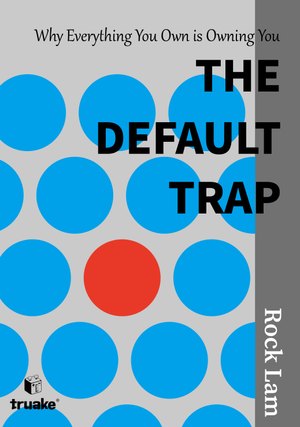
The full argument for why commitment beats optimization — across product categories, information consumption, and life design — is in The Default Trap. To see what a set of fully closed decisions looks like for your consumption contexts, Diffr is live on the App Store.
Diffr is a brand curation app built on the no-repeat principle — one good brand per slot, every slot assigned. It is live on the App Store.
Get Diffr on the App Store